
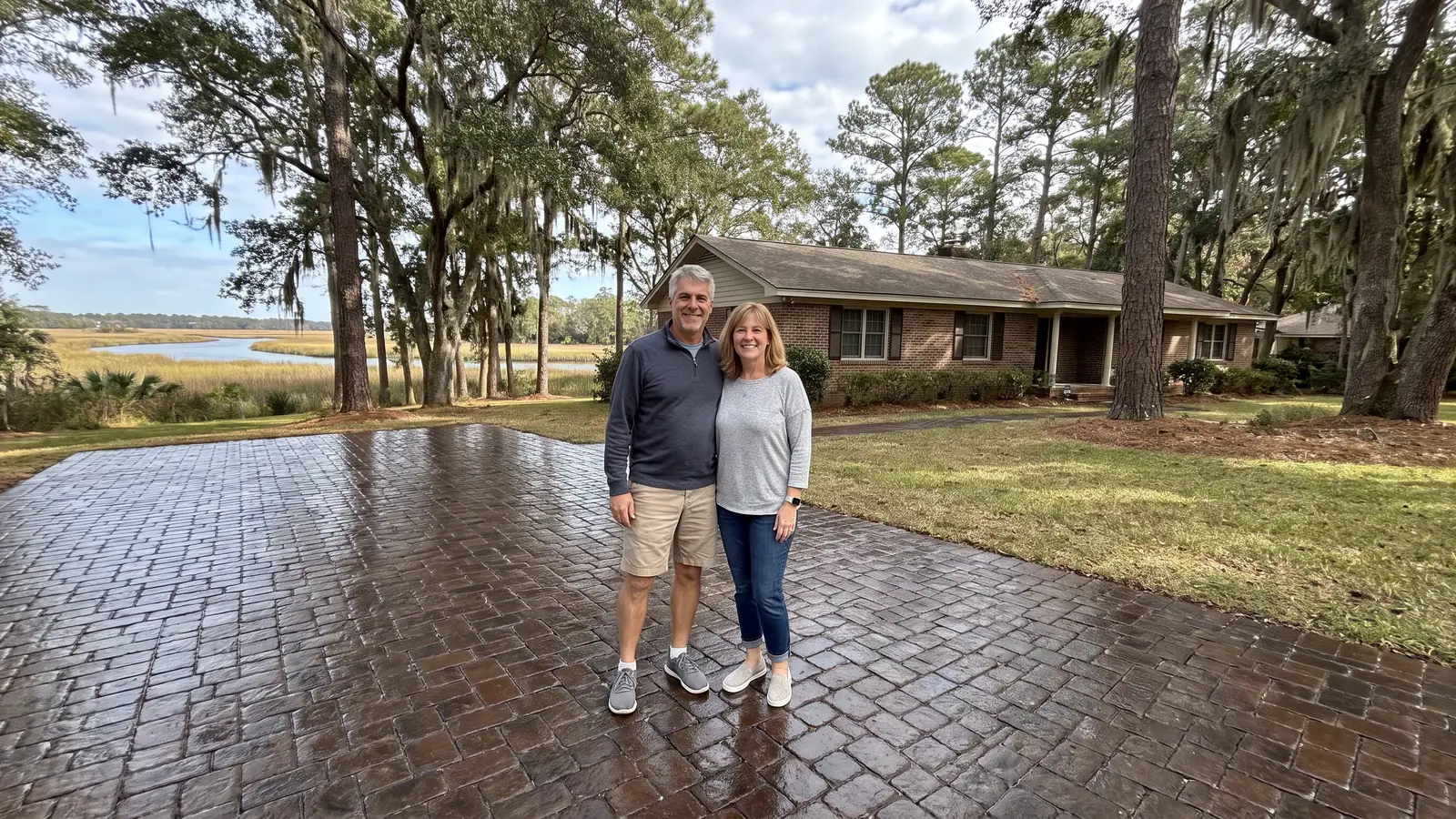
Paver sealing for Sandalwood homes
Paver Sealing in Sandalwood, FL
From Hawaii Drive to Wynnfield Lakes, Sandalwood pavers come in every age; call (904) 637-8112 for a free sealing estimate.
- Brings out deeper paver color
- Fresh joint sand helps lock pavers in place
- Gives weeds less room to grow
- Makes the surface easier to keep clean
- Free estimate, no obligation
Request a Free Estimate
Free, no obligation.
Fast, careful paver sealing in Sandalwood
Paver sealing is available across Sandalwood, from the 1960 ranch streets around Hawaii Drive to the newer homes near Wynnfield Lakes Circle. A local contractor washes, refills and seals driveways, walkways and pool decks, with a free estimate first. You can book your free estimate and expect a reply within 1 business day, usually much sooner.
Think of the drive you pull into every evening. The joints have gone pale, a few weeds are up, and the color looks chalky where the afternoon sun lands. Picture the same pavers after a wash, fresh sand and a new coat, reading as one steady color again. Call (904) 637-8112 and describe yours, and the contractor can tell you what the job would involve.
Why hire a local paver sealing contractor in Sandalwood?
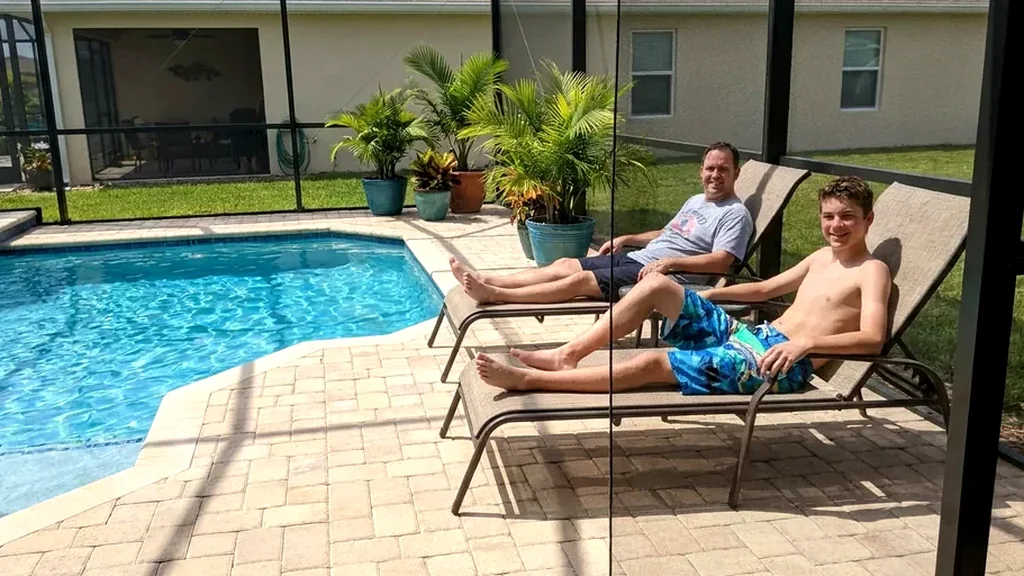
Sandalwood has homes from every decade since 1960, so no two driveways share the same history. A local contractor who sees that mix each week can size up yours quickly, so book your free estimate to get started.
A free look first
The contractor looks at your Sandalwood pavers before any price is set. The estimate is free and carries no obligation.
A range you can check
Northeast Florida companies commonly publish a range of $1.75 to $3.25 per square foot to clean, sand and seal. Use that range to judge any Sandalwood quote.
Matte or wet look
Matte hides scuffs longer. A wet look deepens color but shows tire marks sooner. You pick the finish that suits your Sandalwood home.
You stay in charge
You choose the date and the finish. Sealing waits for dry pavers, so a rainy week may move your Sandalwood job back a few days.
Get Your Free Estimate in Sandalwood
Tell us about your pavers in Sandalwood.
Free, no obligation
What paver problems show up most in Sandalwood?
Summer sun that bleaches color
Average highs in Jacksonville climb to about 92 degrees in the warmest months. One local paver company says UV exposure fades pavers over a few seasons, and that a pressure wash alone only helps for a few months before the color slides back. If your Sandalwood drive looks washed out beside the garage door, the sun has been at it for years. A sealed surface is the usual answer, and a color-enhancing coat can bring some of that depth back. Ask the contractor to compare a matte coat with a color-enhancing one on a small test patch.
Joint sand that leaves with the rain
Rain averages about 52 inches a year, and it comes in brief, hard downpours from May to September. A sample of 25 Sandalwood homes found none in a FEMA flood zone, with a median elevation of 38 feet. Lots that shed water well also shed sand, so the joint sand tends to travel toward the street. Open joints let soil settle in, and weeds follow. If you sweep sand off the pavement after a storm, that is your joint sand leaving. Refilling the joints and sealing them in place is the fix that lasts through the next wet season.
A coat nobody wrote down
County records suggest about 26 of Sandalwood's 296 homes change hands in a typical year. After a few owners, nobody remembers what went on the pavers. That matters, since a water-based coat will not bond over a solvent-based one. The contractor has to learn what is already there before choosing what goes on next. A coat that is peeling or patchy is the clue that the old product needs attention first. If you have lived there a while, tell the contractor what you remember, even a rough year.
Pavers added in different decades
Sandalwood homes run from 1960 to 2019. Where a drive or walk was added in a later decade, two shades can sit side by side, and the older section often looks tired next to the newer one. One coat over the whole surface evens the look, once everything is clean and dry. Washing first matters, since old and new pavers hold dirt differently. The goal is a single, steady color from the street to the front step. A walk to the mailbox or side gate can be a different age again.
A car for every errand
Walk Score rates Sandalwood 14 out of 100 and calls it car-dependent. That means tires cross the driveway several times a day, and a second car usually parks right where the first one turns. Oil, tire marks and drips build up in those spots. A cleaner and a fresh coat bring them back, and sealed pavers tend to wipe clean more easily afterward. Ask for the tire lanes to be treated first, since that is where the staining sits deepest.
Do 1960 ranch streets and newer Sandalwood homes need different sealing?
Often, yes, because the age of the home tells the contractor what to expect underneath. Listings on Hawaii Drive, Dulawan Drive and Indies Drive show homes built in 1960, 1961 and 1962. Weymouth Circle has a 1980 home, Alden Road has one from 1984, and Wynnfield Lakes Circle has one from 2010. Tell the contractor which street you are on when you book your free estimate.
The typical sold home here is small, about 1,309 square feet, so many driveways and walks are modest in size. Small jobs cost more per square foot than large ones, because setup time is spread over less surface. A short front walk and a narrow drive may price higher per foot than a wide drive does. Ask what your total area comes to, and call (904) 637-8112 if you want the contractor to talk through the numbers.
Ownership here is mixed. County records count 173 of 297 parcels as homesteaded, which leaves 42 percent not owner-occupied. A landlord or property manager can book your free estimate just as an owner can, and either way the estimate is free. Say in the request whether a tenant lives there, so the contractor can plan access.
What does paver sealing cost in Sandalwood?
Northeast Florida companies commonly publish a range of $1.75 to $3.25 per square foot to clean, sand and seal. Where a Sandalwood job lands in that range depends on size, old sealer and how much joint sand is missing. A short walkway runs higher per foot than a wide two-car drive, since the setup time is about the same. For a figure on the pavers at your home, book your free estimate.
Failed old sealer causes the biggest jump. One Jacksonville price list says strip-and-reseal sits higher when the old coat has failed. Oil and rust spots add some prep time too, and so does a second visit if rain delays the sealing day. Call (904) 637-8112 and tell the contractor what you know about the coat that is on your pavers now.
| Paved area | Typical example | Clean, sand and seal |
|---|---|---|
| 300 sq ft | Small patio or walkway | $525 to $975 |
| 600 sq ft | Two car driveway | $1,050 to $1,950 |
| 1,000 sq ft | Large driveway or pool deck | $1,750 to $3,250 |
| 1,500 sq ft | Driveway plus pool deck | $2,625 to $4,875 |
Math based on the $1.75 to $3.25 per square foot that Northeast Florida paver companies published as of November 2026. Your contractor sets the actual price after seeing the surface. Repairs, leveling and stripping failed sealer are usually extra.
How does a paver sealing job work in Sandalwood?
Look at the drive and ask about its past
The contractor walks your Sandalwood property and checks for sunken spots, loose edges and old sealer. Low or lifted areas are reset first, since sealing over them keeps the problem in place. Share any receipt or product name you have, even a photo of an old bucket. A water-based coat will not bond over a solvent-based one, so the old coat matters. The walk-through also sets the plan for the order of work.
Wash off the film and stains
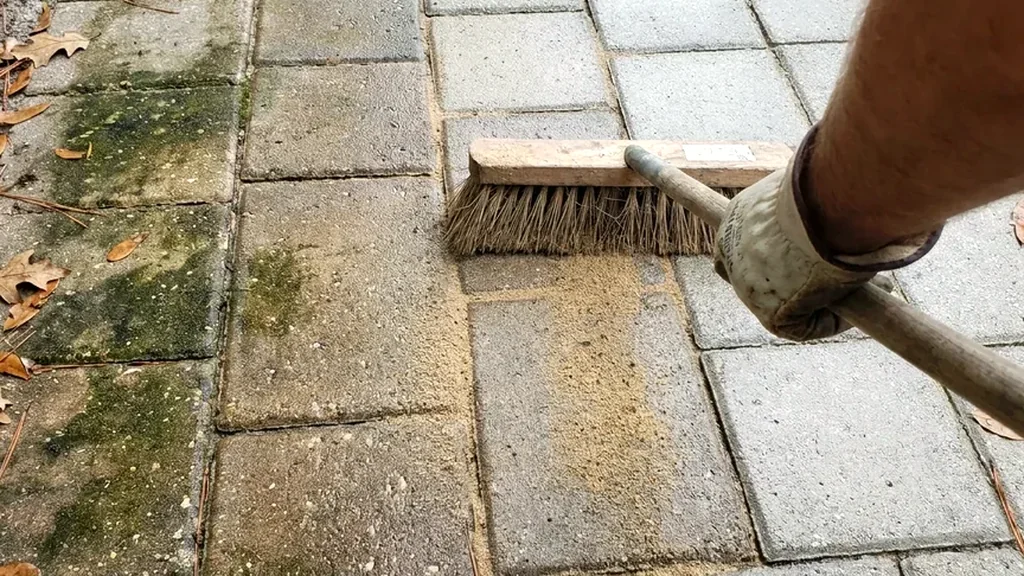
Washing lifts the gray film, oil spots and rust marks. Tire lanes by the garage often need extra passes. Rinse water is steered away from planting beds and the lawn edge, and grill or lanai areas get a second look. Cleaning comes before sand so that nothing dirty gets sealed in. Any green or black growth along damp edges is treated at the same time.
Refill the joints
Washing pulls sand out of the joints, so the contractor replaces it before sealing. Full joints hold the pavers tight and leave weeds less room. Ground that sheds water quickly tends to lose the most sand, so expect fresh sand along any slope. The surface is then swept clean so loose grains do not end up under the coat. This step often takes longer than people expect, because every joint has to be filled.
Wait for dry pavers
Sealer needs a dry surface. Summer storms are common here, so the contractor watches the forecast and holds off on damp pavers. One Jacksonville company says nearly every milky white sealer call traces to damp pavers or a coat laid on too thick. A short delay costs less than a cloudy finish, and it keeps the color even. Shaded edges beside a fence or hedge can take longer to dry than the middle of the drive.
Apply the coat and plan the cure
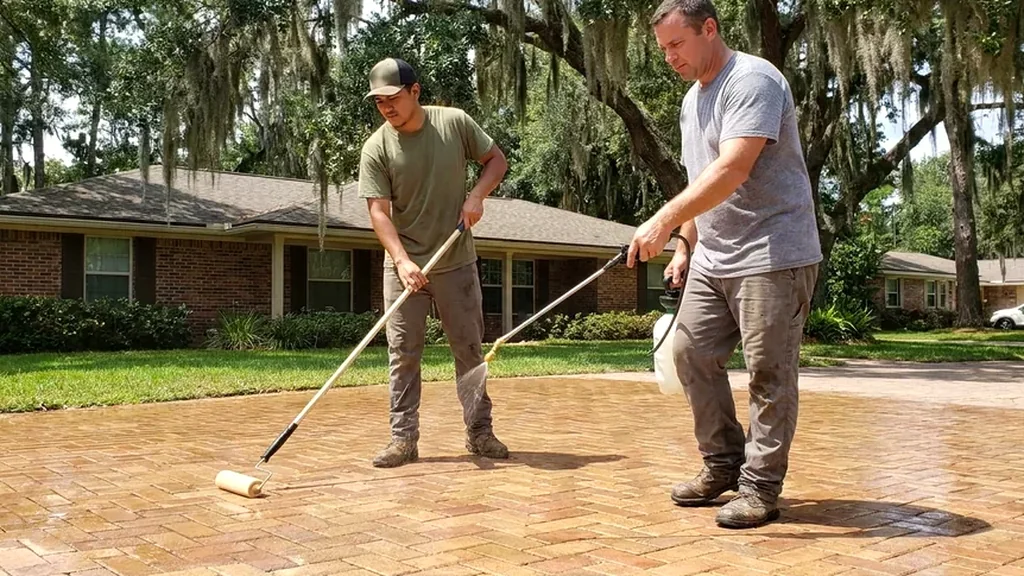
The contractor sprays the sealer and back-rolls it so it works into the joints. Matte hides scuffs longer than a wet look. One Jacksonville company says people can walk on it within a few hours, while cars need about a day. Companies commonly quote two to five years between coats, so ask for a reseal window that fits your driveway. The contractor will tell you when the surface is safe for shoes and for tires.
Complete paver services in Sandalwood
A Sandalwood job follows one order: wash, re-sand, dry, then seal. Washing clears film and stains, and new sand fills the joints before the sealer goes down last. That order keeps dirt from being locked under the coat, and a typical drive takes a day or two. To ask how long each stage runs on yours, call (904) 637-8112.
Driveways take the most wear, since cars turn and park on them every day. Walkways to the front door carry less weight but more foot scuffs. Pool decks and lanai pavers get bare feet, furniture and pool splash, so they are often a separate stage. Tell the contractor which surfaces you want done when you book your free estimate.
The sealer choice starts with what is already on the pavers. Water-based sealer cannot go over solvent-based sealer, so an old coat can limit your options. After that comes matte or a wet look, which deepens color but shows scuffs sooner. Companies commonly quote two to five years between coats, so ask about both finishes when you book your free estimate.
Timing follows the weather. Rain peaks from May to September in short, hard storms, and sealer needs a dry surface. A driveway in open sun dries quickly, and winter brings more open days. Call (904) 637-8112 and ask how the contractor handles a rain delay.
Questions to ask before you hire
- Where does the wash water go, and how do you keep it out of the storm drain?
- Do I need to be home while you work, or can I leave the gate unlocked?
- Who will do the work at my house, you or a crew you hire?
- Can you seal the driveway and the pool deck on the same visit?
- Can you reset the pavers that tree roots have pushed up?
- Will the sealer make my pool deck slippery when it gets wet?
- Will rainwater still drain through the joints after the new sand and sealer go in?
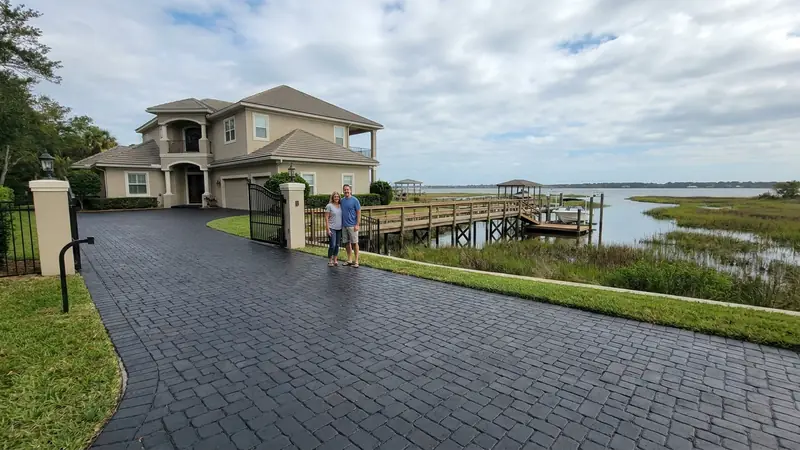
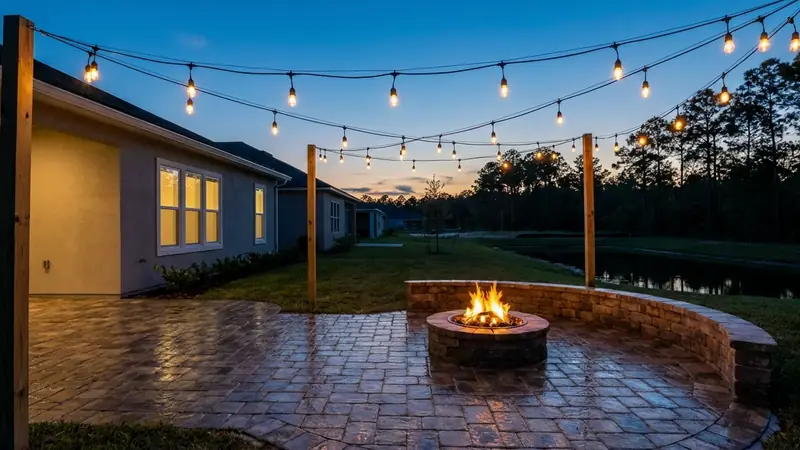
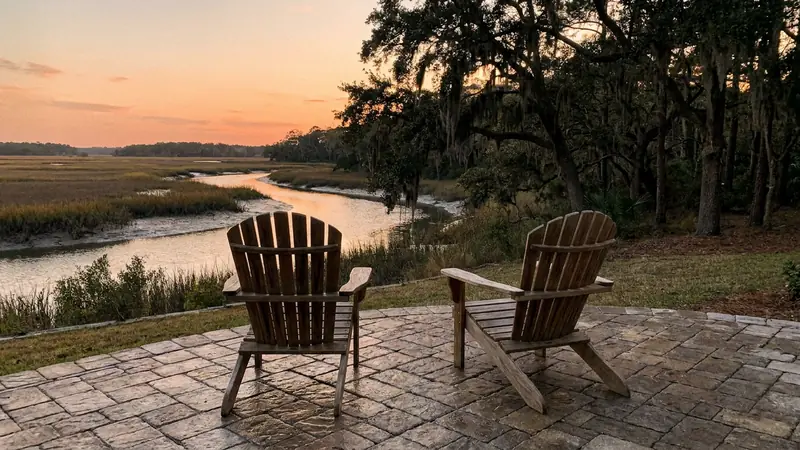
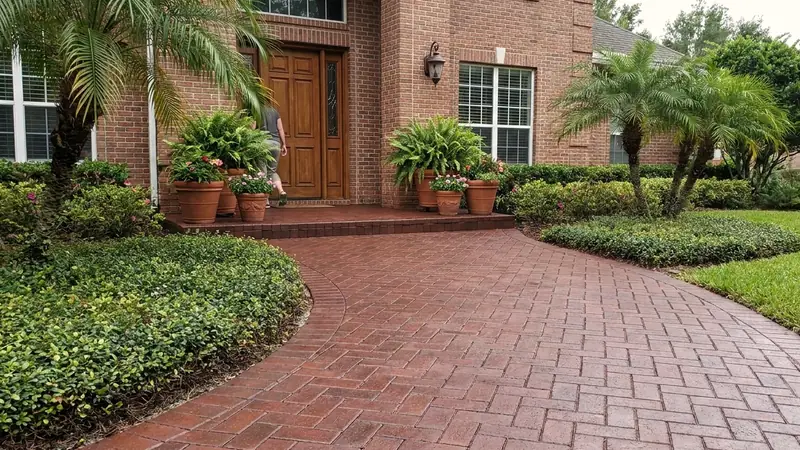
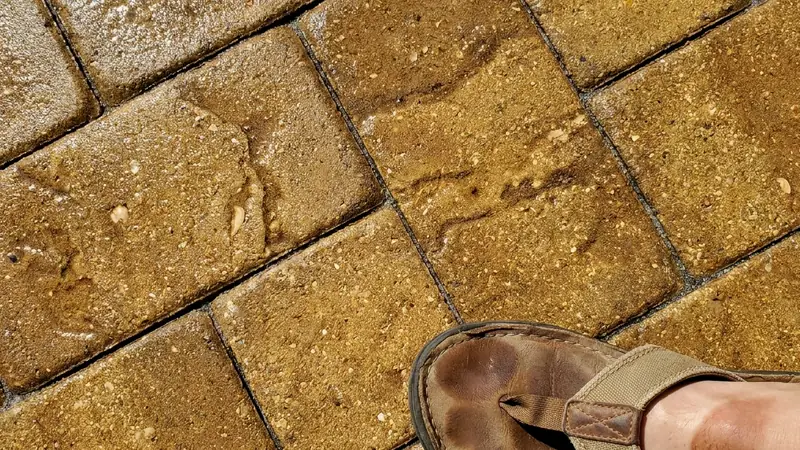
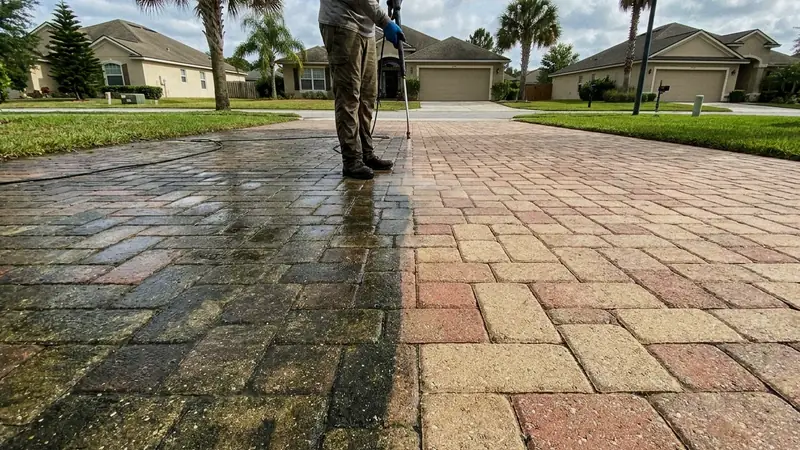
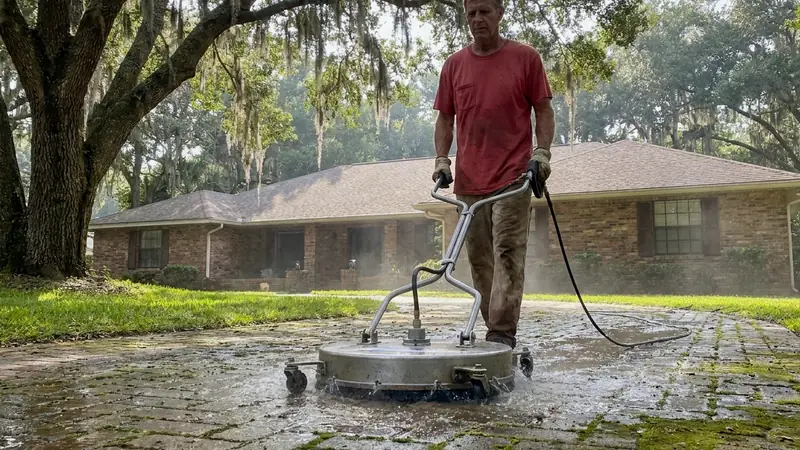
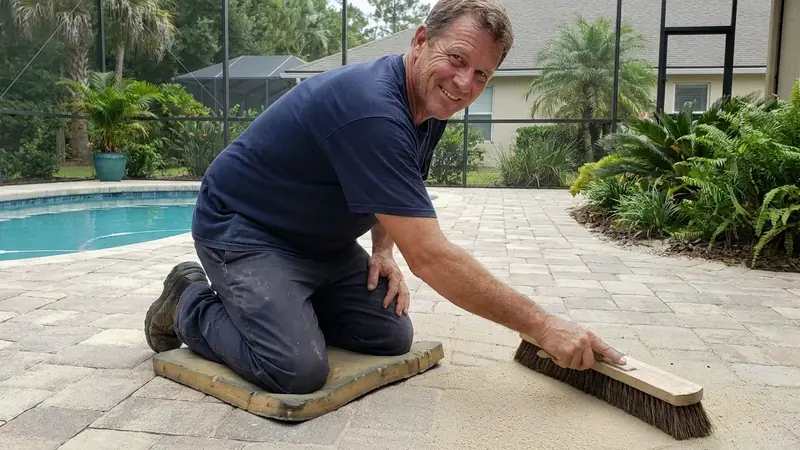
What do sealed pavers look like around Sandalwood?
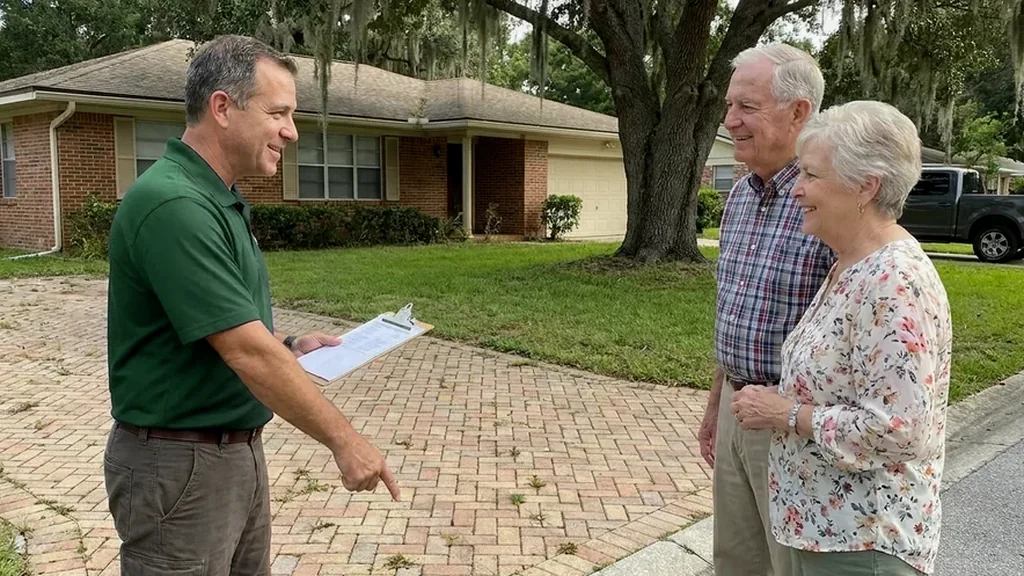
Why local matters in Sandalwood
A contractor who works Sandalwood regularly knows what a 1960s build looks like and how later owners changed it. Drives were added, widened or replaced in different decades, so the age of the pavers rarely matches the age of the house. That history shapes how much washing and sand the job needs, and how likely an old coat is to be hiding underneath. Call (904) 637-8112 to talk with a contractor who works in Sandalwood.
Local timing matters most in summer, when afternoon storms can arrive in a hurry. A contractor who knows the pattern books dry mornings and leaves room for a rain day. You get a coat that cures the right way instead of one that clouds over. You can book your free estimate and ask how the contractor plans around storms, and what happens if one rolls in mid-job.
Rental and resale homes have needs of their own. A property manager may want one clean look across several homes, and a seller may want curb appeal before listing day, since about 26 Sandalwood homes sell in a typical year. A local contractor can size those jobs in one visit. If that sounds like you, book your free estimate and say when you plan to list or re-let.
How did Sandalwood start, and does that matter for pavers?
Sandalwood began developing in the spring of 1960, about 6 miles from both downtown and the beaches, and builder Pearce-Uible led the way. The same firm also built San Jose, Arlington Manor and Grove Park, according to Jaxson Magazine. Wikipedia counts Sandalwood among the planned subdivisions that spread as Arlington grew after the Mathews Bridge opened in 1953. If you live on one of those first blocks, book your free estimate.
Sandalwood High School opened as a junior-senior high on September 7, 1971, in the Southside corridor. The area was planned for drivers, and Walk Score still rates it car-dependent. That is why the driveway is the busiest paver surface on most lots, and why it ages first. Near the school or anywhere else in Sandalwood, call (904) 637-8112.
The soil under this part of Duval County is sand. The USDA describes the Ortega soil series, whose type location is in Duval County south of Beach Boulevard, as deep, moderately well drained sand formed on marine terraces. Sandy ground drains fast, which is part of why joint sand moves after a storm. A contractor who works here plans the sand step with that in mind, so book your free estimate for a free look at your pavers.
Frequently Asked Questions
Why is paver sealing so expensive in Sandalwood?
Most of the price is prep, not product. The contractor washes, re-sands and seals, and setup time is spread over the whole job, so small jobs cost more per square foot. Companies around Northeast Florida commonly publish $1.75 to $3.25 per square foot. Failed old sealer, stained spots and heavy joint sand loss push a quote higher. Ask for the price per square foot and the total area in writing, so the numbers are clear.
Which water-based paver sealer should I ask for in Sandalwood?
Ask the contractor for the product name and finish before work starts, because the right choice depends on what is on your pavers now. A water-based coat will not bond over a solvent-based one. Matte hides scuffs longer, and a wet look shows them sooner. Keep the label name on file so the next coat matches. A short product name on the invoice also helps a future contractor.
How long does paver sealing last in Sandalwood?
Most companies quote somewhere between two and five years for one coat. A coat on a driveway wears faster than one on a patio, since tires and turning do more damage than feet. One Jacksonville company gives a simple test: if water beads, the coat is working, and if it soaks in and darkens the pavers, the coat is done. Shade, sun and daily driving all shorten or stretch that span.
How much does it cost to have Sandalwood pavers cleaned and sealed?
Expect $1.75 to $3.25 per square foot to clean, sand and seal, the range companies around Northeast Florida commonly publish. Multiply your square footage by that range to get a rough total. A small job tends to land toward the high end, and a job with failed old sealer can run higher still. Strip-and-reseal sits higher when the old coat has failed.
Should a rental home in Sandalwood get its pavers sealed?
It can make sense, because cleaning and sealing discourages ants and weeds and sealed pavers wipe clean more easily. County records show 42 percent of Sandalwood parcels are not owner-occupied. A property manager can ask for an estimate the same way an owner can, and the estimate is free. Mention the tenant's schedule so access is easy.
Can pavers be sealed the day after a Sandalwood rainstorm?
Only if they are fully dry. Sealer needs a dry surface, and sealing damp pavers is a common cause of a cloudy white finish. Sun and open ground help pavers dry sooner, but the contractor decides by checking the joints, not the sky. If in doubt, the job waits a day.
What happens to the weeds and ants in my paver joints?
They are cleared out and the joints are refilled with sand, and the sealer then helps hold that sand in place. Cleaning and sealing discourages ants and weeds from coming back. Joints that are badly worn may need a closer look before sealing, so point out any hills or weed lines at the first visit. Ant hills can return in open joints, and refilled joints give them less room.
How long should I stay off a sealed Sandalwood driveway?
Plan on a few hours for foot traffic and about a day for cars, depending on the sealer and the weather. The contractor sets a time for your particular coat. Park on the street or in the garage overnight if you can, and keep sprinklers off the drive until the coat has cured.
Ready for a Free Estimate in Sandalwood?
Call (904) 637-8112 and tell us about your pavers.
Free, no obligation