
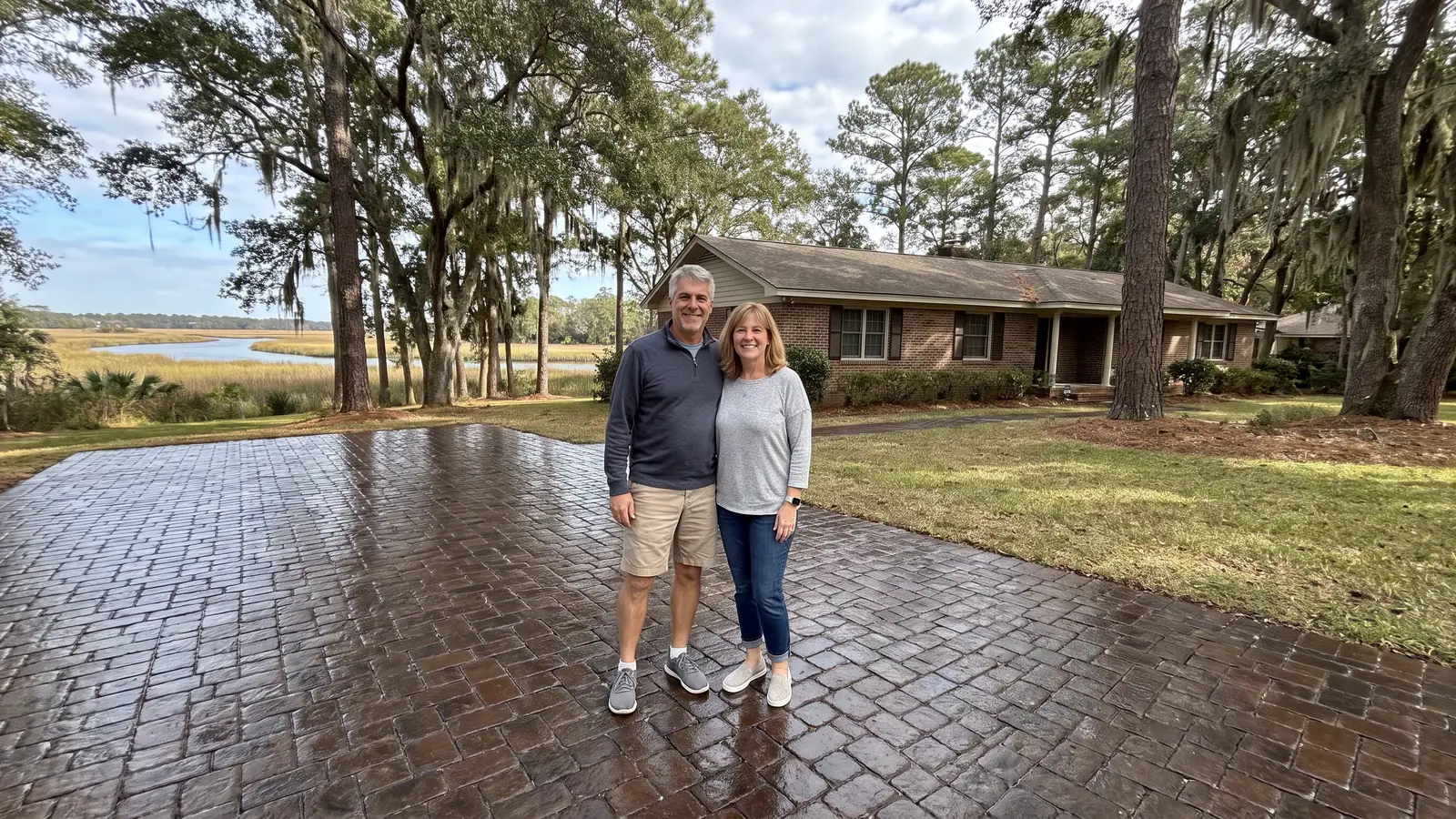
Paver sealing for Arlington homes
Paver Sealing in Arlington, FL
Under Arlington's live oaks, rain leaves brown stains on pavers; call (904) 637-8112 for a free sealing estimate.
- Brings out deeper paver color
- Fresh joint sand helps lock pavers in place
- Gives weeds less room to grow
- Makes the surface easier to keep clean
- Free estimate, no obligation
Request a Free Estimate
Free, no obligation.
Fast, careful paver sealing in Arlington
Paver sealing in Arlington starts with a free estimate, and a local contractor works anywhere from the river blocks to the creek streets in the south. The contractor cleans, re-sands and seals driveways, walkways and pool decks. Ask for a quote with book your free estimate, and a reply arrives within 1 business day, usually much sooner.
Maybe brown streaks run down your front walk from the oak above it, and joint sand has been drifting toward the street for a season or two. Cleaned, refilled and sealed, that same walk can look the way it did on its first day. Call (904) 637-8112 and describe what you see.
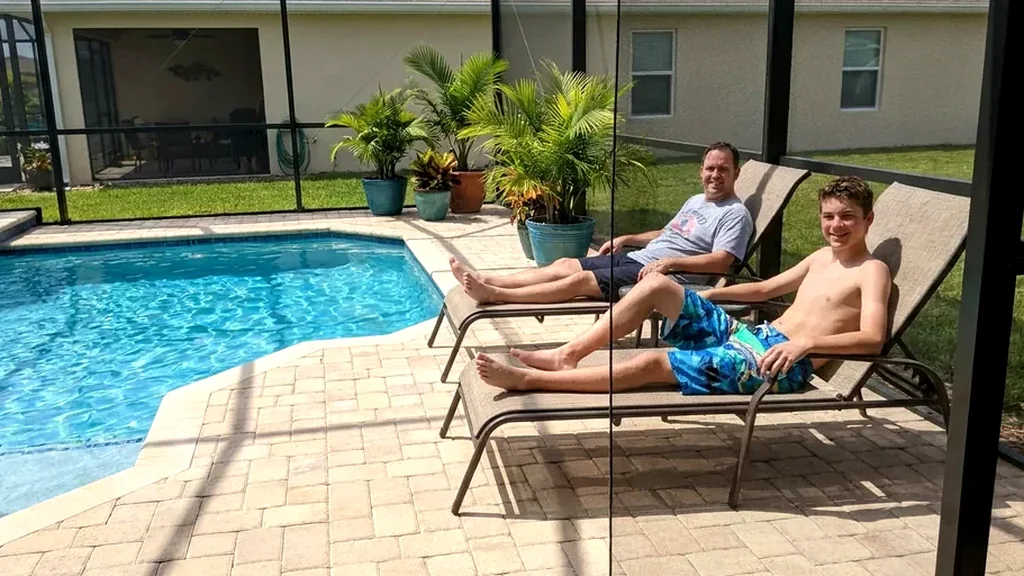
Why hire a local paver sealing contractor in Arlington?
Arlington grew in waves from 1953 on, so a single street can hold pavers laid in three different decades. A local paver contractor reads that mix quickly, so book your free estimate and ask what yours needs.
Stains handled first
Oak tannin and algae get treated during the wash, so brown marks are not sealed under the coat.
A fair yardstick
Across Northeast Florida the going rate is $1.75 to $3.25 a square foot for clean, sand and seal. Bids should land near it.
No pressure to start
The estimate is free, and you can turn it down without explaining yourself.
A date that suits the weather
Dry days are what sealer needs, so the contractor picks a window with you instead of forcing one.
Get Your Free Estimate in Arlington
Tell us about your pavers in Arlington.
Free, no obligation
What paver problems show up most in Arlington?
Brown stains under the live oaks
Safe Touch's Jacksonville page says Arlington and any yard under a live-oak canopy gets brown tannin stains on drives and walks. It adds that sealer on pavers keeps the next season from locking the stain in. If a big oak shades your front walk, expect those marks to come back each wet season. The stain has to come out before sealing, since sealer would trap it. The contractor treats it during the wash. On a shaded walk, that often means a second look in spring, after the oaks drop their leaves and the first rains soak them. A free estimate is a good time to point those spots out.
Sand that drains away on high ground
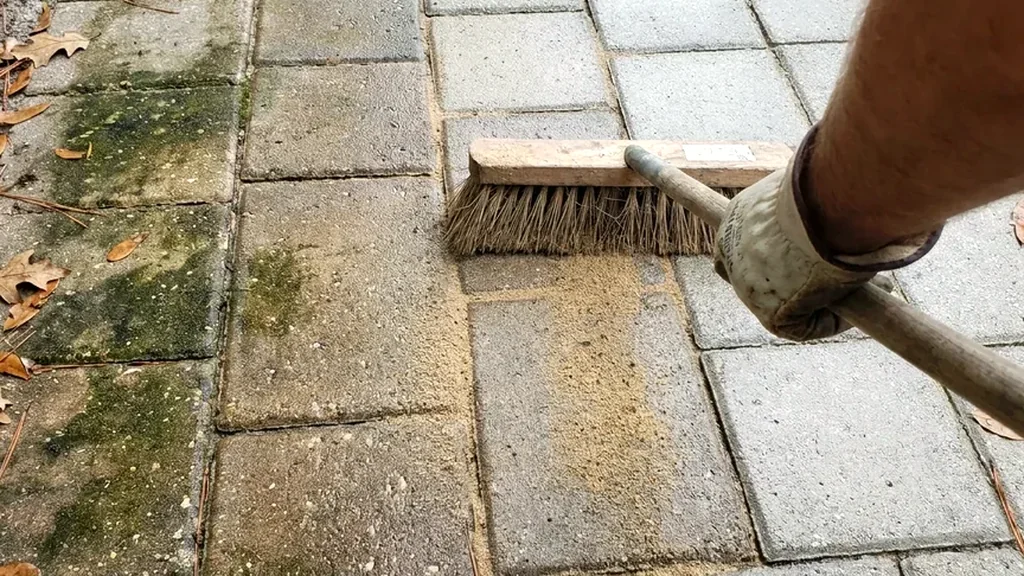
A MetroJacksonville history says some Arlington land sits higher, and that early residents prized it for excellent drainage. Good drainage helps pavers dry, but it also carries joint sand away with the rain. Add Jacksonville's hard downpours from May to September, and open joints show up by midsummer. They get refilled before sealing so weeds and ants have less room. If you have ever swept pale sand out of a gutter after a storm, you have watched it happen. A walk near a downspout or at the top of a slope loses the most.
Street water and creek overflow
In Arlington Hills, News4JAX reported street flooding on Woolery Drive for more than a year, with stormwater running toward Strawberry Creek. Pottsburg Creek, in southern Arlington, swings in level after storms because retention ponds and storm drains feed it. Pavers that sat in muddy water keep a gray film. That film has to be washed off before any sealer goes on. Tell the contractor if water ever reached your drive, even once, so the cleaning plan can match.
Pavers from three different eras
Arlington grew most quickly after the Mathews Bridge opened in 1953, and building went on for decades after that. A walk added in one decade and a drive widened in another rarely match in color. Nobody may remember what was put on either one. Water-based sealer cannot go over solvent-based sealer, so the contractor checks the old coat before choosing a product. A short test on a hidden corner can show how an old coat will behave.
Dips over a sandy base
Regency Square Mall was built in 1967 on an expanse of sand dunes, and the USDA describes the Ortega soil series, first mapped in Duval County, as sand on marine terraces. Sand under a paver base can shift over the years, and a low spot holds water. One Jacksonville company says sealing locks in a surface as it is, so sunken or lifted sections get reset first. A level check at the start tells the contractor how much repair the job needs before any coat goes on, and gives you a clear price for it.
Does my part of Arlington change how pavers get sealed?
A little, yes, because Arlington covers a lot of ground. It runs from the St. Johns River south to the Arlington River and east toward the Intracoastal Waterway, with creeks, oaks and sandy lots in between. A river-side street under big oaks leans toward stain removal, while an open lot leans toward sun and sand loss. Say which side you are on when you book your free estimate.
Arlington Hills, off Merrill Road, has a record of street flooding on Woolery Drive, and the city said in 2022 that it planned to rebuild a culvert near Arble Drive. If your yard drains toward Strawberry Creek, tell the contractor about any past water. A short description now saves a surprise later. Call (904) 637-8112 to talk it over.
Near Jacksonville University, which bought its land in 1947, many homes date from the postwar decades. WJCT notes that mid-century houses from the 1950s and 60s are still standing across the area. Their drives and walks have often been redone since, so ask the contractor to check what lies under the surface, and book your free estimate for a free look.
What does paver sealing cost in Arlington?
Published prices across Northeast Florida run $1.75 to $3.25 per square foot for clean, sand and seal. For an Arlington ranch with a wide drive and a front walk, the total follows the square footage. Small pads sit higher per foot, because setup takes about the same time either way. To see where yours falls, book your free estimate.
Three things move an Arlington quote. Tannin and algae stains add wash time, empty joints add sand, and a failed old coat adds stripping, which one Jacksonville price list says sits higher than a plain reseal. Sunken sections add repair, and a pool deck or long front walk adds area. Call (904) 637-8112 and say which of these you see.
| Paved area | Typical example | Clean, sand and seal |
|---|---|---|
| 300 sq ft | Small patio or walkway | $525 to $975 |
| 600 sq ft | Two car driveway | $1,050 to $1,950 |
| 1,000 sq ft | Large driveway or pool deck | $1,750 to $3,250 |
| 1,500 sq ft | Driveway plus pool deck | $2,625 to $4,875 |
Math based on the $1.75 to $3.25 per square foot that Northeast Florida paver companies published as of November 2026. Your contractor sets the actual price after seeing the surface. Repairs, leveling and stripping failed sealer are usually extra.
How does a paver sealing job work in Arlington?
Check the surface and ask for its history
The contractor walks the property and notes where the surface dips, where edges have lifted and where an old coat shows. Dips get reset before sealing, because a coat only preserves what lies under it. Tell the contractor about past street water or earlier sealing. That history guides the choice of product.
Treat the stains, then wash
Stains are treated first: oak tannin, algae, oil and rust. The main wash follows and pulls off the gray film that stormwater leaves. Runoff from the rinse is steered away from beds and siding. Nothing dirty should be left to end up under the sealer.
Fill every joint with fresh sand
Drainage on high ground had already pulled some sand out, and washing removes more. The contractor sweeps new sand into each joint until it sits full, then clears loose grains. A full joint locks the pavers and leaves less room for weeds. Slopes and edges take the most.
Let the pavers dry all the way
Walks under oaks stay damp longer than an open drive, so drying is checked joint by joint. Sealed over moisture, a coat can go milky, which is why a Jacksonville company ties most white-sealer calls to damp pavers or a heavy coat. Waiting a day costs less than redoing the finish.
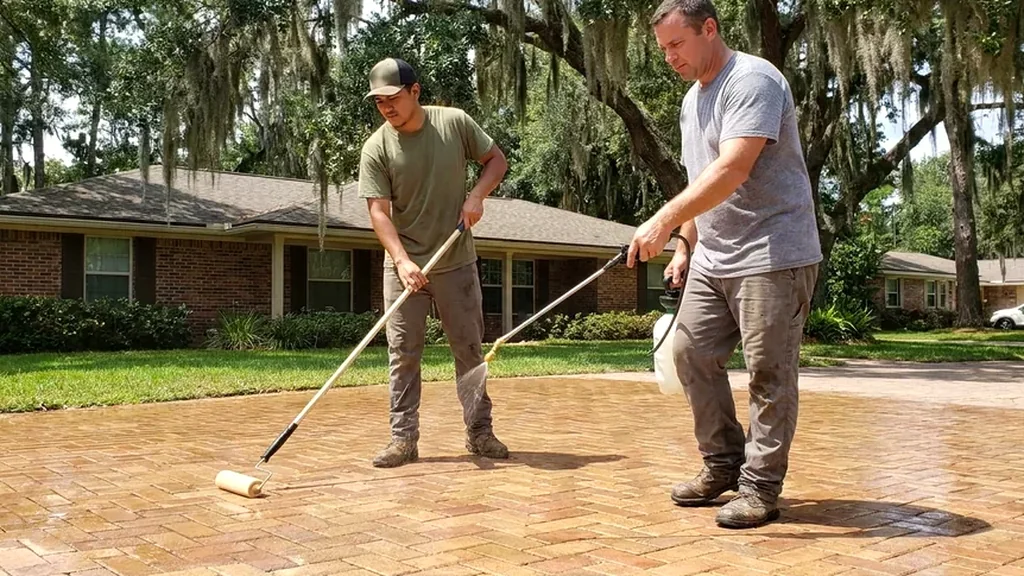
Spray, back-roll and keep off
Sealer goes on in an even coat, worked into the joints with a roller behind the sprayer. Your contractor will say when walking and parking are safe again; one Jacksonville company puts that at a few hours and about a day. Keep sprinklers off until it cures, and ask for the product name.
Complete paver services in Arlington
Brown marks come first on most Arlington jobs. The stain treatment and wash clear tannin, algae and grime before any sand or sealer is touched. Once the surface is clean, fresh sand fills each joint. Call (904) 637-8112 and ask about the full sequence.
Arlington properties usually mix surfaces: a long front drive, a walk shaded by oaks, and a rear patio or pool deck. Each gets its own wash time, because shade, sun and traffic change how dirty it gets. Name every surface in your request so the quote covers them all. You can book your free estimate and list them there.
Finish is a choice of look. Matte lets a mid-century front keep its flat, clean lines, while a wet look gives the color more depth. A solvent-based coat already on the surface rules out a water-based one, so the old coat has a say. Ask for a test patch when you book your free estimate.
Sealing is a dry-weather job, so the date follows the forecast. Summer storms can push a day back, and a damp corner under an oak may hold things up longer than the open drive. Fall and spring leave bigger gaps between storms. Call (904) 637-8112 to ask how soon someone can look.
Questions to ask before you hire
- Can you reset the pavers that tree roots have pushed up?
- Does the sealer hold up to splashed pool water and chlorine?
- Who will do the work at my house, you or a crew you hire?
- Does your quote list the cleaning, the sand and the sealer as separate lines?
- Can you seal the driveway and the pool deck on the same visit?
- Where does the wash water go, and how do you keep it out of the storm drain?
- How warm and dry does it need to be before you will start sealing?
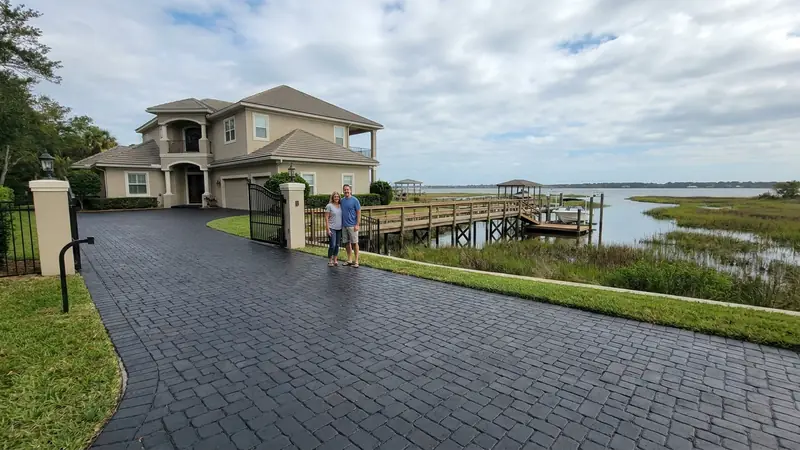
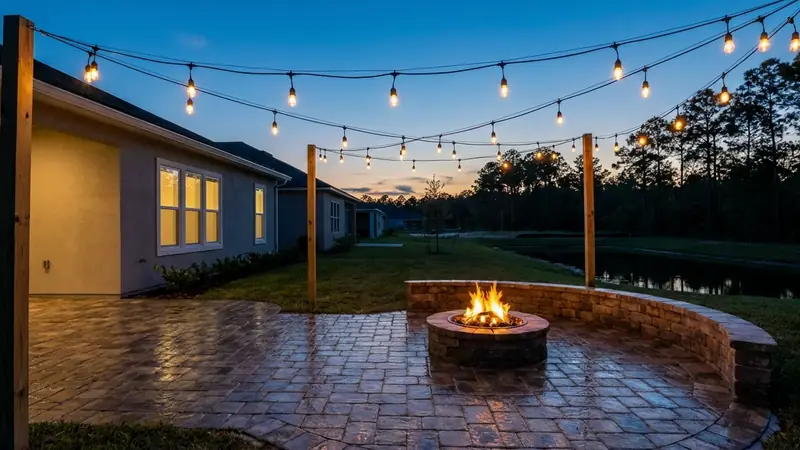
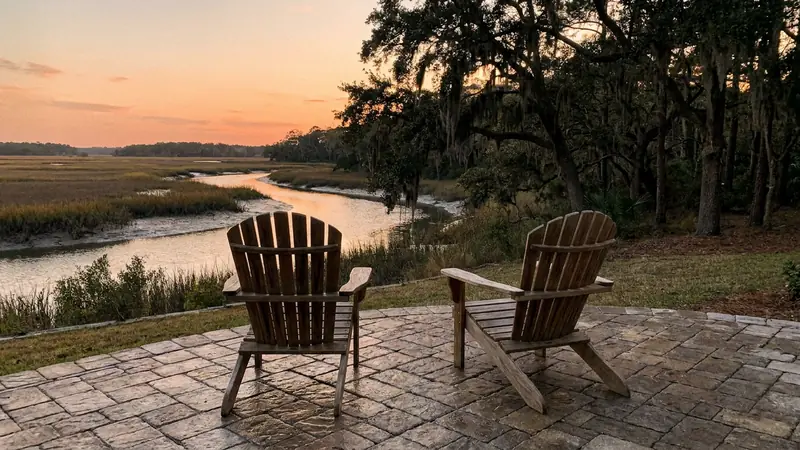
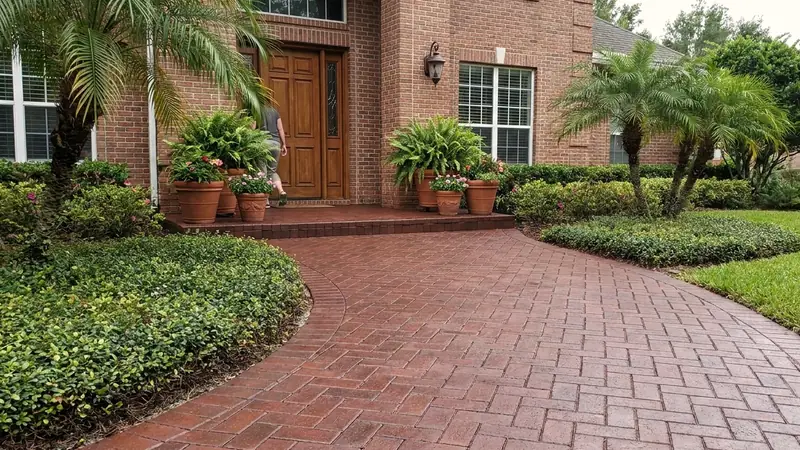
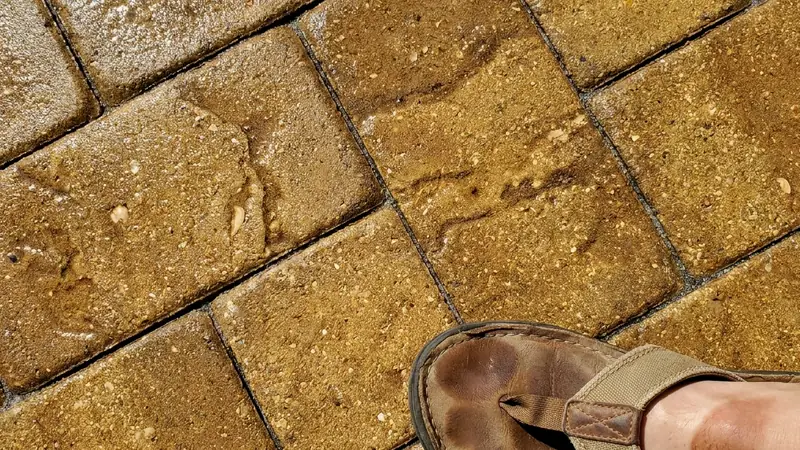
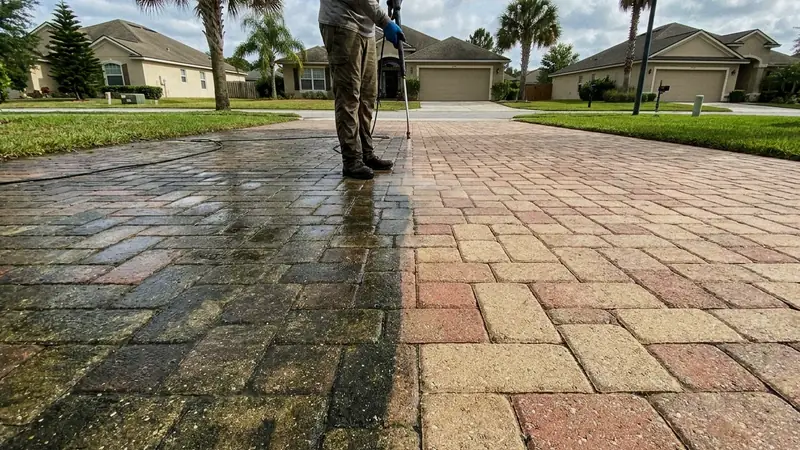
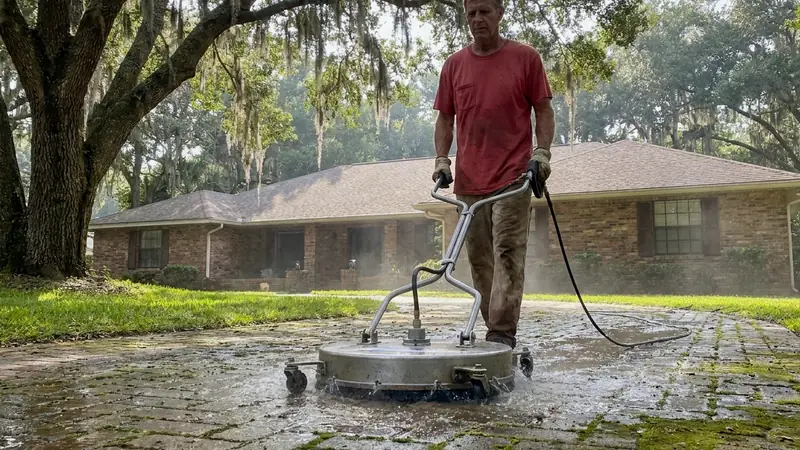
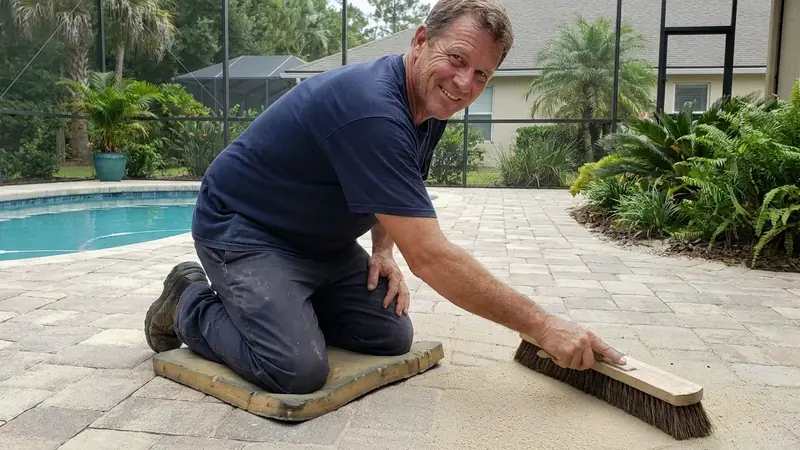
What do sealed pavers look like around Arlington?
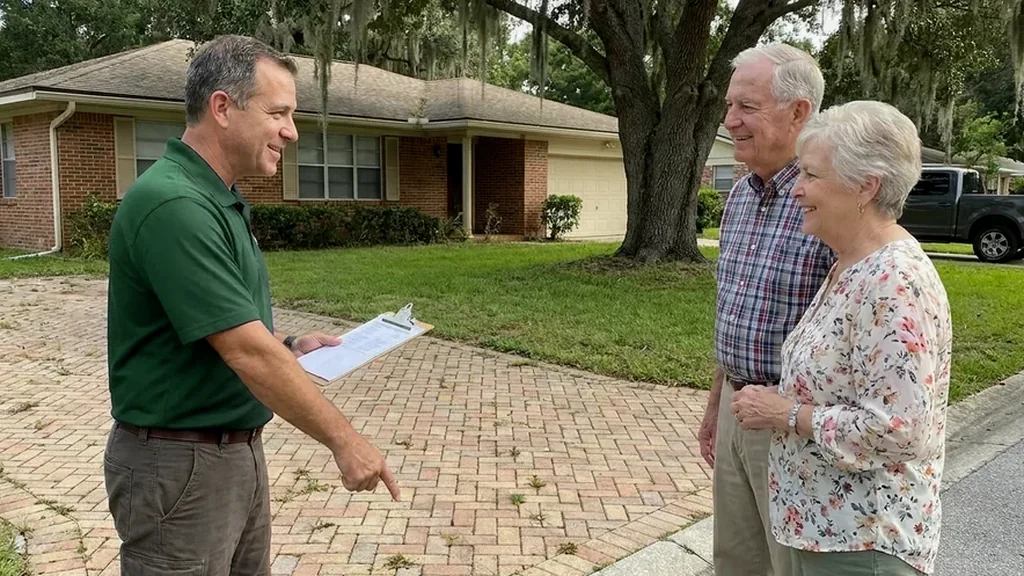
Why local matters in Arlington
A contractor who works Arlington knows that brown oak stains and sand loss come with the neighborhood, so those get planned for before the wash begins. Someone from outside the area may treat them as surprises. Knowing the pattern saves a second trip, and it keeps the price honest from the first visit. Call (904) 637-8112 to reach a contractor who works this part of Duval County.
Arlington is large, and a local contractor knows that conditions change from the river side to the creek side. Street water in Arlington Hills is a different problem from sun on an open lot near the university. The contractor asks where you live and plans around it. You can book your free estimate and name your street to start that conversation.
Mid-century homes call for a light touch around the front of the house. A contractor who has worked on 1950s and 60s ranches knows to keep rinse water off brick and trim and to ask about earlier work. That is simple care, and it protects what you already have. If that sounds like your house, book your free estimate and mention roughly when it was built.
Large lots are common on Arlington's older streets, and long driveways mean more surface to wash and seal. A local contractor can size a long drive quickly and explain what drives the price. If yours is long, book your free estimate and give a rough length.
How did Arlington's growth shape the driveways here?
Arlington grew in steps, and each step left its own layer of pavement. Atlantic Boulevard, finished in 1910, was Florida's first modern improved highway and tied the mainland to the beaches. The Mathews Bridge opened in 1953, and the area then grew faster than any other part of Jacksonville for two decades. If your home came from that era, book your free estimate.
Families kept arriving between the 1940s and the 1970s, and Tree Hill Nature Center opened as a city park in 1971. Regency Square Mall followed in 1967 on a field of sand dunes, and the Dames Point Bridge joined Arlington to the Northside in 1989. Homes built across those decades sit side by side today, which means pavers of every age. Near any of these landmarks, call (904) 637-8112 and name your street.
The Arlington River marks the southern edge of the area, and Pottsburg Creek runs into it. Jacksonville University and Terry Parker High School both sit in Arlington today, according to Wikipedia. Homes near them range from 1950s ranches to later builds, so a quote depends on the lot, not the address alone. If your pavers are older than your last sealing, book your free estimate.
Frequently Asked Questions
Is it good to seal pavers in Arlington?
Usually, yes. Sealing holds sand in the joints, discourages ants and weeds, and slows fading. Under Arlington's oaks it also helps, since sealer keeps the next season from locking a tannin stain in. The free estimate shows what your walk and drive call for.
What is the average cost to seal pavers in Arlington?
Across Northeast Florida, companies publish $1.75 to $3.25 per square foot to clean, sand and seal. Multiply your area by that range for a ballpark. Failed old sealer, stains and sunken sections push the total up, and small pads cost more per foot.
Why is paver sealing so expensive in Arlington?
Labor and prep make up most of the price. Stains are treated, the surface is washed, joints are refilled and everything dries before a drop of sealer goes on. A short walk costs more per foot than a long drive because setup is the same. Ask for the area and the rate on paper.
Which water-based paver sealer should I ask for in Arlington?
Ask for the brand and the finish before work begins. A water-based product cannot be laid over a solvent-based coat, so whatever is on the surface limits the choices. Matte and wet look are what most people pick, and a copy of the product name helps with your next coat.
How long does paver sealing last in Arlington?
Expect somewhere from two to five years before the next coat, going by what companies commonly quote. A busy drive wears faster than a back patio. One Jacksonville company offers a quick check: if water beads, the coat is working, and if it soaks in and darkens the paver, it is spent.
Can sealing stop brown oak stains on Arlington pavers?
It helps, though it cannot stop the oaks from dropping leaves. Safe Touch says sealer on pavers keeps the next season from locking a stain in. Existing stains still need treating and washing out before the coat goes on. Sweep leaves off the walk through the wet season.
Will street water in Arlington Hills hurt freshly sealed pavers?
Not after the coat has cured. The contractor waits for dry pavers and gives you a time to keep cars and water off. Pavers that already sat in muddy water need a thorough wash first, since sealer would lock the film in, and the joints are checked for moisture before work starts. Ditch and culvert work nearby does not change this.
Can new pavers be sealed next to old ones?
Usually, with one caution. One Jacksonville company advises waiting 30 to 60 days after a new install before the first sealing, so efflorescence can work its way out. The older section is washed and checked for an old coat so both end up matching.
Does sealing fix sunken pavers on my Arlington driveway?
No. Sunken pavers must be reset first, because one Jacksonville company says sealing locks in a surface as it is. Lifted or low areas are repaired on a rebuilt base before the coat goes on. Show the contractor any low spots at the first visit.
How long do I stay off a newly sealed Arlington driveway?
Plan on a few hours for walking and about a day for cars, depending on the sealer and the weather. You will get a time for your own coat from the contractor. If you can, park on the street or in the garage overnight.
Nearby areas we serve
Ready for a Free Estimate in Arlington?
Call (904) 637-8112 and tell us about your pavers.
Free, no obligation